
Tips to Keep Your Pipes from Freezing
Preventing frozen pipes can be remarkably easy and cost-effective. Here are some tips to help you keep your pipes healthy year-round.
Proper Sealing and Insulation
If you’re not able to properly insulate your pipes on your own, have them professionally insulated. It is especially important to have insulation around pipes in the unheated areas of your home, like the basement or attic.
Holes or cracks in your ceiling, walls, and attic can let in a great deal of cold air. So much so, in fact, that the cold and wind chill from those openings alone can freeze sections of pipe. Not only is it more energy-efficient to properly seal holes and cracks with caulk or expanding foam, but it can also save your pipes.
If you have a crawlspace in your home, securely covering the pipes down there can help keep warmer air circulating around your pipes.
Keep Doors Closed as Much as Possible
If you have a garage, keep the door closed as much as possible, especially if you have any pipes going through the garage. If your garage is attached to your home, leaving the garage door open can also cause the temperature inside your home to drop substantially.
To help keep as much heat as possible flowing throughout your home, keep the interior doors open as often as possible. As there are a lot of pipes in kitchens and bathrooms, keep the cabinets in those rooms open as much as possible.
Use Your Faucets Regularly
Use all the faucets in your home on a regular basis. If you’re going to go away during the winter, figure out which faucets use pipes that are exposed to exterior walls or cold air. Let those faucets drip just a tiny dribble of cold water. It may sound crazy, but this will actually make it more difficult for those pipes to freeze.
If you have a pool, be sure to set a timer for the pump to run several hours each day, even when it is too cold for a swim, as recommended by the city of Scottsdale, AZ.
One thing you should never do is use antifreeze in any of your pipes or water lines! Not only is antifreeze harmful to the water supply, but it is also dangerous if children, pets, or wildlife come into contact with it.
Keep the Temperature in Your Home Constant
Whether you’re at home during the winter or not, turn on the heat and leave it on at least 55 degrees Fahrenheit. Keeping a consistent temperature in your home can help keep your pipes ice-free and safe.
Close and Clear Out Your Outdoor Faucets
For faucets located outdoors, such as hose connections, be sure they are closed and cleared. Turn off the water to them and protect them with an insulated faucet cover.
Why You Should Take Steps to Prevent Frozen Pipes
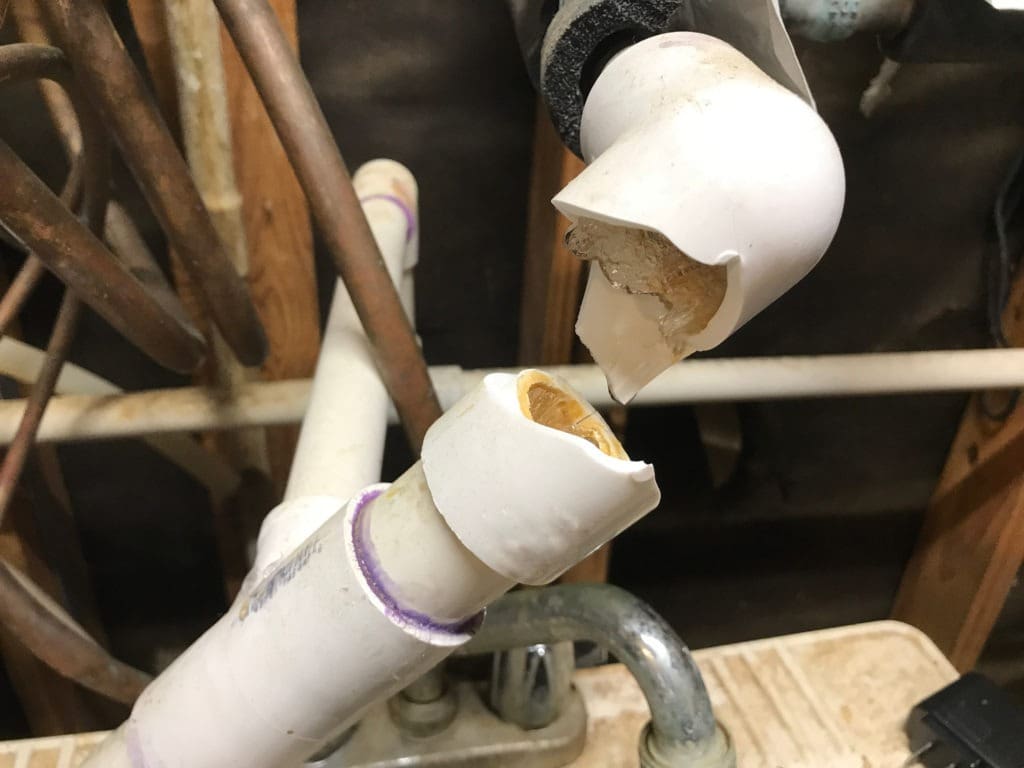
Whether you don’t use heat in your home during the winter or are simply not on the premises, it pays to prevent the pipes from freezing, as recommended by the U.S. Department of Energy. Frozen pipes lead to burst pipes. Burst pipes lead to water damage. Water damage leads to mold, mildew, and rotting floors, walls, and ceilings.
This all can add up to hundreds or even thousands of dollars in clean-up and repairs. And your homeowner’s insurance may or may not pay those costs.
Related: What Is a Slab Leak?

Why Pipes Freeze and Burst
If you’ve ever left a can of soda in a freezing cold car overnight, you know what a mess that can make. It freezes and bursts inside your vehicle. Well, the same thing can happen to your pipes.
Water expands when it freezes. So, if you have water in your pipes and those pipes freeze, they can erupt.
No matter where in the country you live, you can experience freezing pipes. If your home is in a warmer climate, it is probably not designed or insulated to withstand cold temperatures. In this case, it will only take a few days of below-freezing temperatures to damage the pipes.
Basements are the most commonplace in a home for frozen pipes and resulting leakage. Attics and garages are also common spaces where this problem occurs.
How to Know Your Pipes Are Frozen
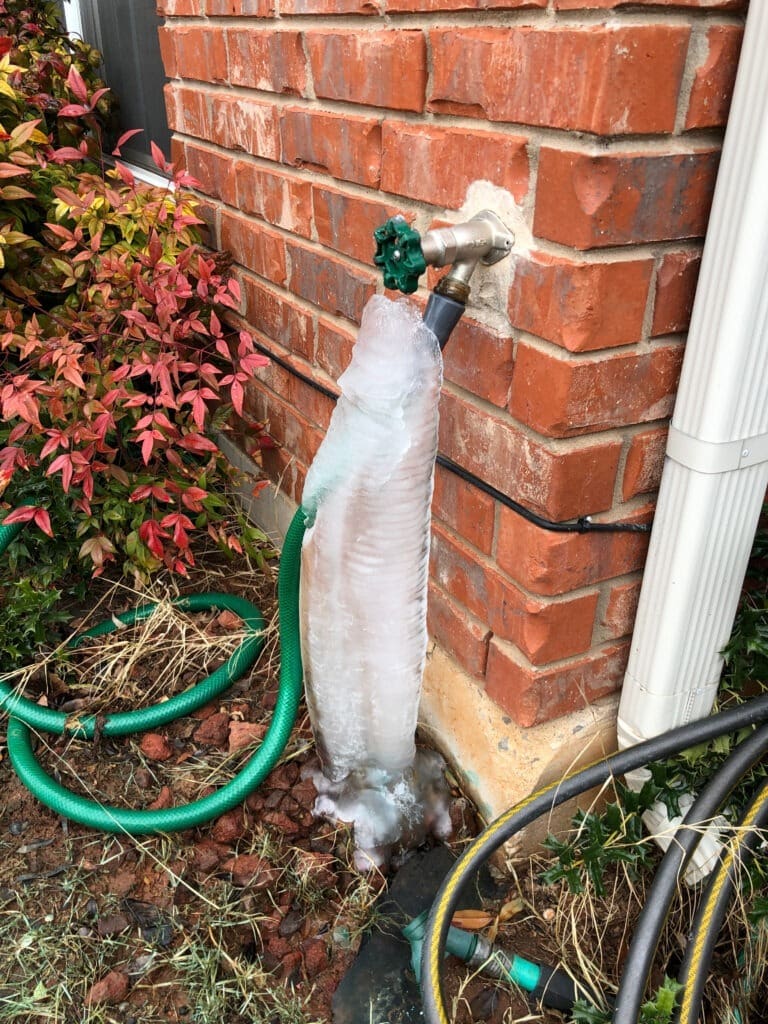
If you turn on your faucets and there is no running water, or if only a dribble of water comes out, it’s a sign that your pipes are frozen. Ice or frost on one or more of your pipes is also a dead giveaway.
You can try to thaw your pipes on your own, but it is not recommended. If any pipes have burst, especially in areas you aren’t able to see easily, it could cause flooding and extensive water damage. Also, if one section of pipe is frozen, it’s highly likely other sections have frozen over as well.
Safely thawing pipes takes time and, often, special equipment, to do safely and without adding to the damage. One call to Plumbing by Jake will take care of the problem.